
What is Diabetes and Risk Factors
CCS EDUCATION | 3 MIN READ

what is diabetes?
Diabetes is a condition that occurs when glucose (sugar) builds up in the blood and the body is not able to use glucose the way it should.
Normally, when there is sugar in the blood, a hormone called insulin, which is produced by the pancreas, is released. Insulin helps the sugar get into the body’s cells so it can be used for energy
or stored for later use.
With diabetes, the pancreas may not make any insulin or not enough insulin. Or sometimes, the body is unable to use the insulin it does make. Then the sugar remains in the bloodstream and this causes the glucose levels to rise too high.
Type 1
Type 1 diabetes occurs when the body attacks it’s insulin-making cells. This means that the pancreas can no longer make insulin. People with type 1 diabetes must take insulin every day, to manage their glucose levels throughout their lives. While managing Type 1 diabetes primarily involves insulin injections, it’s also important to maintain a healthy lifestyle. This includes eating a healthy diet, staying active with regular exercise, and managing weight.
Type 1 diabetes usually occurs in children, teenagers or young adults, although it can also affect older adults. It was formerly known as insulin dependent diabetes, or juvenile diabetes. Only 5-10% of people with diabetes have type 1.
Type 2
Type 2 diabetes occurs when the body makes insulin but may not make enough or be able to use it properly. People with type 2 diabetes may also need to manage it by taking medicine and/or insulin injections. Keeping a healthy lifestyle is important for managing diabetes. This includes eating a healthy diet, staying active with regular exercise, and managing weight.
Type 2 diabetes was formerly called non-insulin dependent diabetes, or adult-onset diabetes, but a growing number of children and teens now have type 2 diabetes. It occurs in 90-95% of all people with diabetes.
https://www.cdc.gov/diabetes/basics/what-is-type-1-diabetes.html. Accessed 04/2024
https://www.cdc.gov/diabetes/basics/type2.html. Accessed 04/2024
Risk Factors for type 2 diabetes
- Being overweight
- Having a family history of diabetes
- Having gestational diabetes during pregnancy
- Having a baby who weighed more than 9 pounds
- Having high blood pressure
- Certain races and ethnicities, including Black, Hispanic, Native American, Asian, and
- Pacific Islanders have a higher predisposition
Gestational diabetes
Type of diabetes that occurs during pregnancy. The prevalence can be
as high as 10%. If not treated, it can cause problems for mothers and babies. Many women who had gestational diabetes will go on to have type 2 diabetes later in life.

Pre-diabetes
Stage that occurs before a person gets type 2 diabetes. Glucose levels are higher than normal, but they are not high enough to be diagnosed with diabetes. About 98 million Americans have pre-diabetes and more than 80% don’t even know they have it.

- https://www.cdc.gov/diabetes/basics/prediabetes.html. Accessed 04/2024
- https://www.cdc.gov/diabetes/prevention/about-prediabetes.html. Accessed 04/2024
This site is for educational purposes only. Talk to your doctor or healthcare provider before making any decisions about your health.
RESOURCES

CCS Diabetes Guide
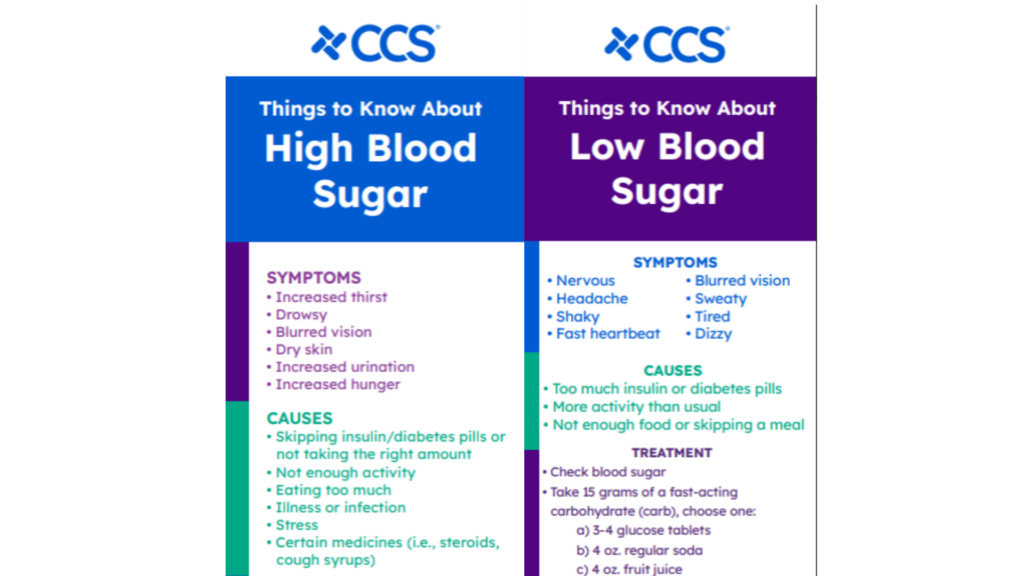
Blood Sugar Bookmark

Healthy Snack Ideas

Counting Carbs

CCS Diabetes Guide (Spanish)
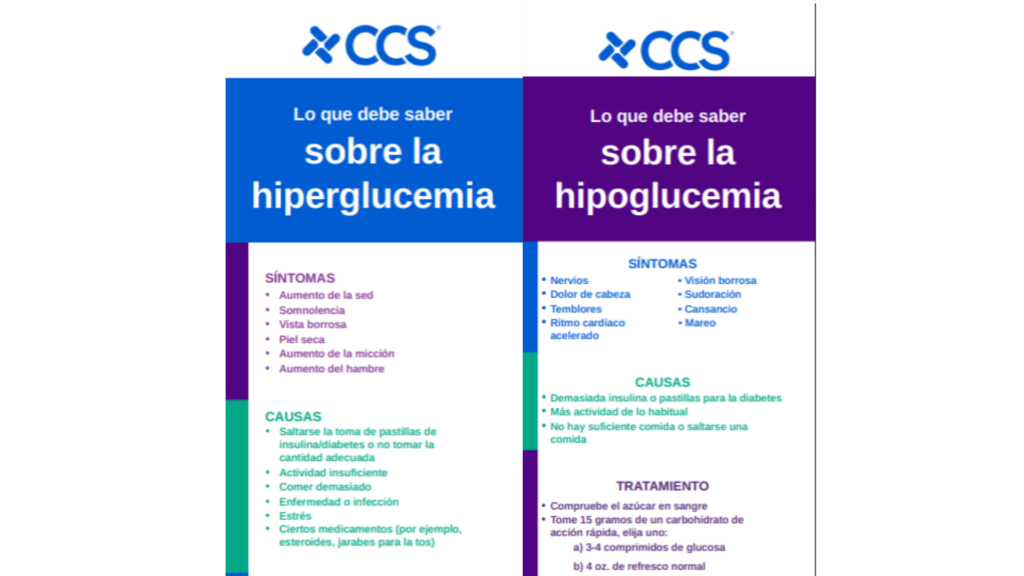
Blood Sugar Bookmark (Spanish)

Healthy Snack Ideas (Spanish)
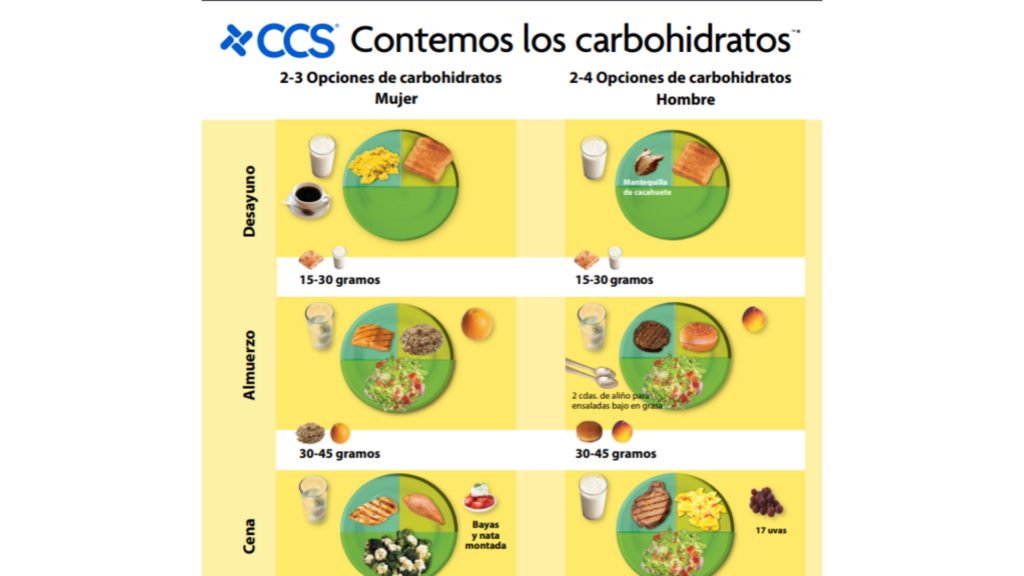
Counting Carbs (Spanish)