
Guidelines for Sick Days Living with Diabetes
CCS EDUCATION | 2 MIN READ

Sick day guidelines
Being sick can raise your blood sugar. Even a cold can cause your glucose to rise. Talk with your healthcare provider about how you should take care of your diabetes when you are sick
Check you blood sugar at least every two to four hours
Write down the results. Check more often if you are not sure how you are doing.
Keep taking your insulin and/or diabetes medicine
Even when you cannot keep food down, you still need your insulin and/or diabetes medicine. For people with type 2 diabetes, insulin may be needed to keep glucose in better manage.
Follow your meal plan
- Drink plenty of sugar-free liquids. Drink at least 8 oz. every hour you are awake.
- If it is hard for you to eat or you have trouble keeping food down, eat or drink fluids with sugar. Try ginger ale or regular soda (not diet), non-citrus fruit juice or apple juice.
- If you cannot eat your usual food, try crackers, gelatin, clear soup, popsicles or applesauce.
If you have type 1 diabetes, check your urine for ketones if your glucose is over 250 mg/dL
Call your healthcare provider if your ketones are “moderate” to “high.”
Tell a family member tha you are sick. Ask someone to stay with you, if possible
Call your healthcare provider when any of the following occurs:
- Your glucose is more than 250mg/dL twice in a row.
- You vomit more than once.
- You have diarrhea, which occurs more than five times a day or lasts longer than six hours.
- You have moderate or large urine ketones.
- You feel weaker than usual or you cannot think clearly.
- You have trouble breathing.
- You cannot keep any fluids down.
- You are unsure you can take care of yourself
When you call your healthcare provider, be ready to tell him/her the following:
- Your symptoms (vomiting, diarrhea, pain).
- Your blood sugar and urine ketone levels during the time you have been sick.
- The foods and fluids you have been able to keep down.
- Any medicines you have taken, including insulin and/or diabetes pills and over-the-counter
- medications, such as cough syrup, pain relievers, etc.
- How long you have been sick.
- Any concerns or questions you have.
If your glucose is greater than 300mg/dL, call your healthcare provider immediately, go to the emergency room or call 911.
If you go to the hospital or the emergency room, tell the healthcare
providers and nurses that you have diabetes.
This site is for educational purposes only. Talk to your doctor or healthcare provider before making any decisions about your health.
RESOURCES
CCS Diabetes Guide
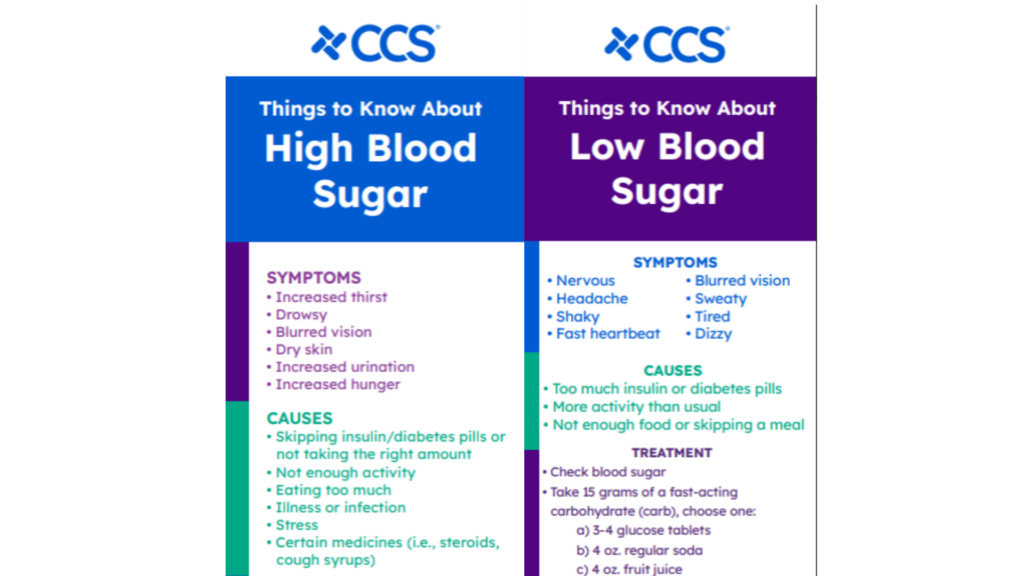
Blood Sugar Bookmark
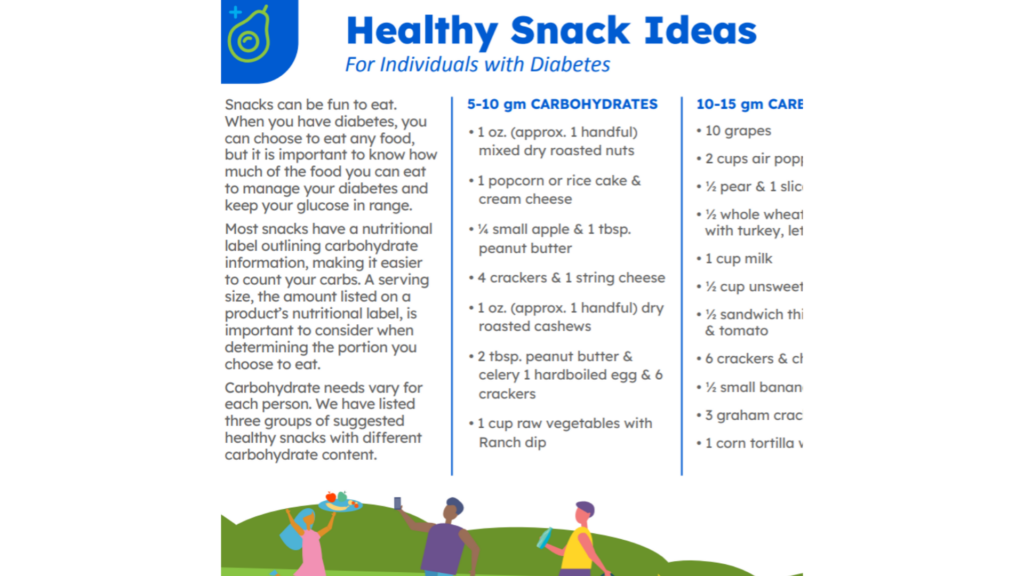
Healthy Snack Ideas
CCS Diabetes Guide (Spanish)
Blood Sugar Bookmark (Spanish)

Healthy Snack Ideas (Spanish)