Tips for Building Your Thanksgiving Plate
Thanksgiving is a day built around food—but living with diabetes doesn’t mean you have to sit out the feast. Turkey, stuffing, mashed potatoes, cranberry sauce and even dessert can have a place on your plate.
The trick is knowing what is on your plate, how much you are eating and how different foods may affect your blood sugar. A little planning can help you enjoy the foods you love while still keeping diabetes management in mind.
Start With the Main Event
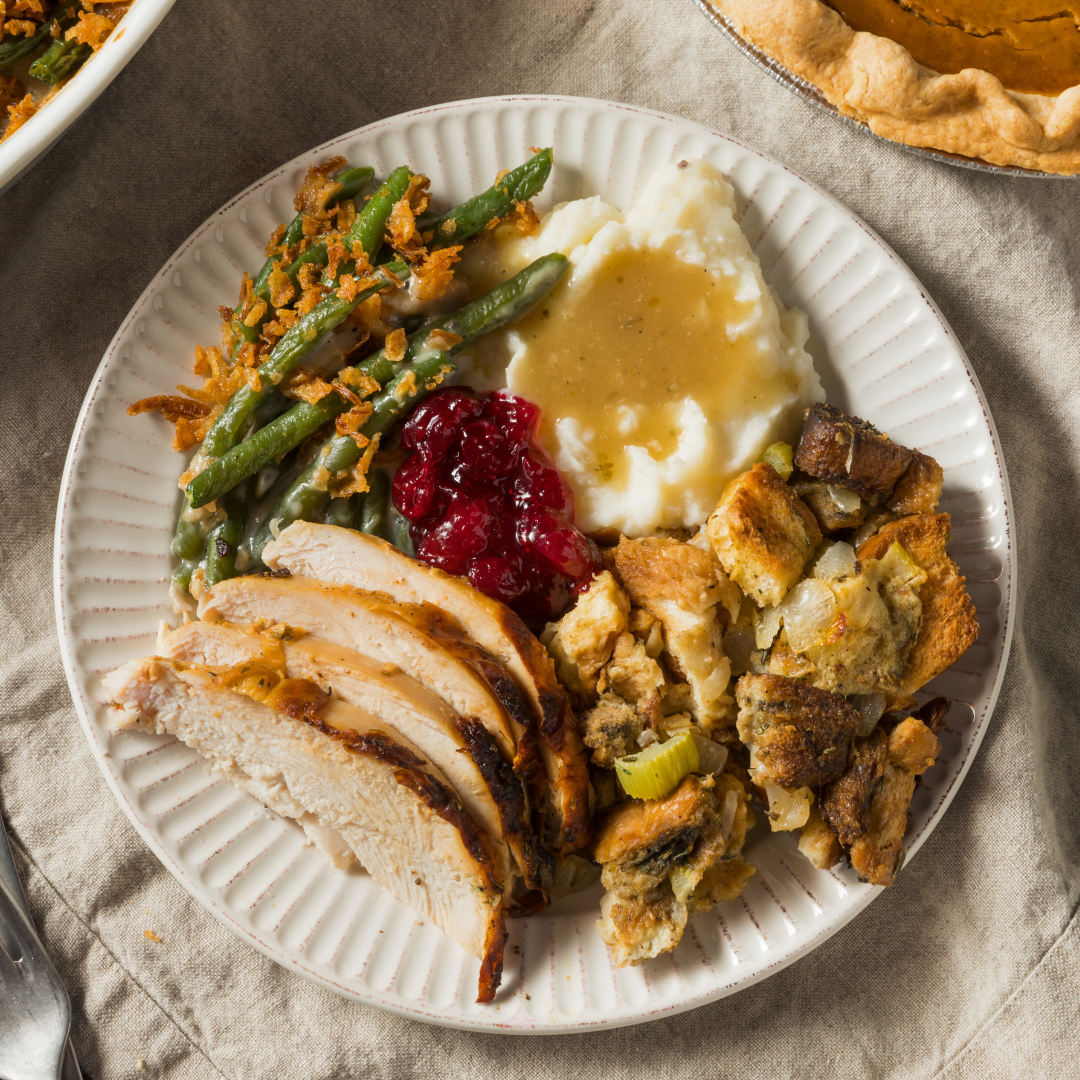
When it is time to build your Thanksgiving plate, a simple place to start is the plate method. Picture your plate divided into three sections:
- Half your plate: Non-starchy vegetables, such as green beans, Brussels sprouts, broccoli, salad or roasted carrots.
- One-quarter: Protein, such as turkey, chicken, fish or a plant-based protein.
- One-quarter: Foods higher in carbohydrates, such as stuffing, mashed potatoes, sweet potatoes, rolls or macaroni and cheese.
The plate method isn’t a strict rule. Think of it as a helpful starting point for creating some balance while still making room for your Thanksgiving favorites.
Pick the Carbs You Really Want
Thanksgiving can put a lot of carbohydrate-rich foods on one table. Stuffing, potatoes, rolls, corn, cranberry sauce and desserts can all add carbohydrates to your meal.
You don’t have to skip them all. Instead, look at your options before filling your plate and choose the foods you really want. Maybe Grandma’s stuffing is a must, while the dinner roll is something you can have any day. Smaller portions can also let you enjoy several favorites without loading your plate with every option.
Don’t Forget the Appetizers
The eating often starts long before the turkey hits the table! Cheese and crackers, dips, chips, nuts and other appetizers can add up without feeling like a full meal.
Try mixing in options with protein, fiber or non-starchy vegetables. Think veggies and hummus, shrimp cocktail, cheese with a few whole-grain crackers, nuts or a veggie tray. You can still enjoy your favorite appetizer, just remember that what you eat before dinner is part of the day’s overall picture.
And Yes, You Can Have Dessert
Pumpkin pie isn’t automatically off the menu because you have diabetes. Dessert does contain carbohydrates, so it helps to plan for it.
If you know pie is your favorite part of Thanksgiving, consider having a little less stuffing or potatoes at dinner. You can also choose a smaller slice, split two desserts with someone so you can taste both, or simply pick the one dessert you really love.
Most importantly, enjoy it. Thanksgiving is one meal, and food is also about tradition, family and celebration.
A Few More Thanksgiving Tips
Try not to skip breakfast or lunch to “save up” for Thanksgiving dinner. Arriving extremely hungry can make it harder to pay attention to portions, and changing your normal meal schedule can also affect blood sugar.
If you use insulin or other diabetes medications, keep your usual diabetes management plan in mind as meal times change. Thanksgiving meals can also be higher in both carbohydrates and fat, which may affect blood sugar differently or cause a rise several hours after eating. Check your glucose as recommended by your care team and follow the plan you’ve developed with them.
And after dinner? If it works for you, a family walk can be a nice way to get moving and get everyone out of the kitchen for a while!
Looking for More Thanksgiving and Diabetes Tips?
There’s plenty of Thanksgiving guidance out there. Here are a few vetted resources:
- American Diabetes Association Diabetes Food Hub: Find diabetes-friendly Thanksgiving recipes, meal ideas and tips for building a balanced holiday plate.
- CDC Healthy Eating and the Holidays: Get practical advice for handling holiday meals, changing meal times, carbohydrates and favorite treats.
- CDC Buffet Table Tips: Learn how to approach appetizers, side dishes, proteins, desserts and drinks when you have lots of choices in front of you.
Build a Plate You Can Enjoy
There is no such thing as a “perfect” Thanksgiving plate. Your diabetes needs, medications, traditions and favorite foods are personal to you. Use these tips as a guide, follow the plan you and your care team have developed, and leave room for the foods that make the holiday special.
Author: Bernice Boivin, RD, CDCES
This site is for educational purposes only. Talk to your doctor or healthcare provider before making any decisions about your health.